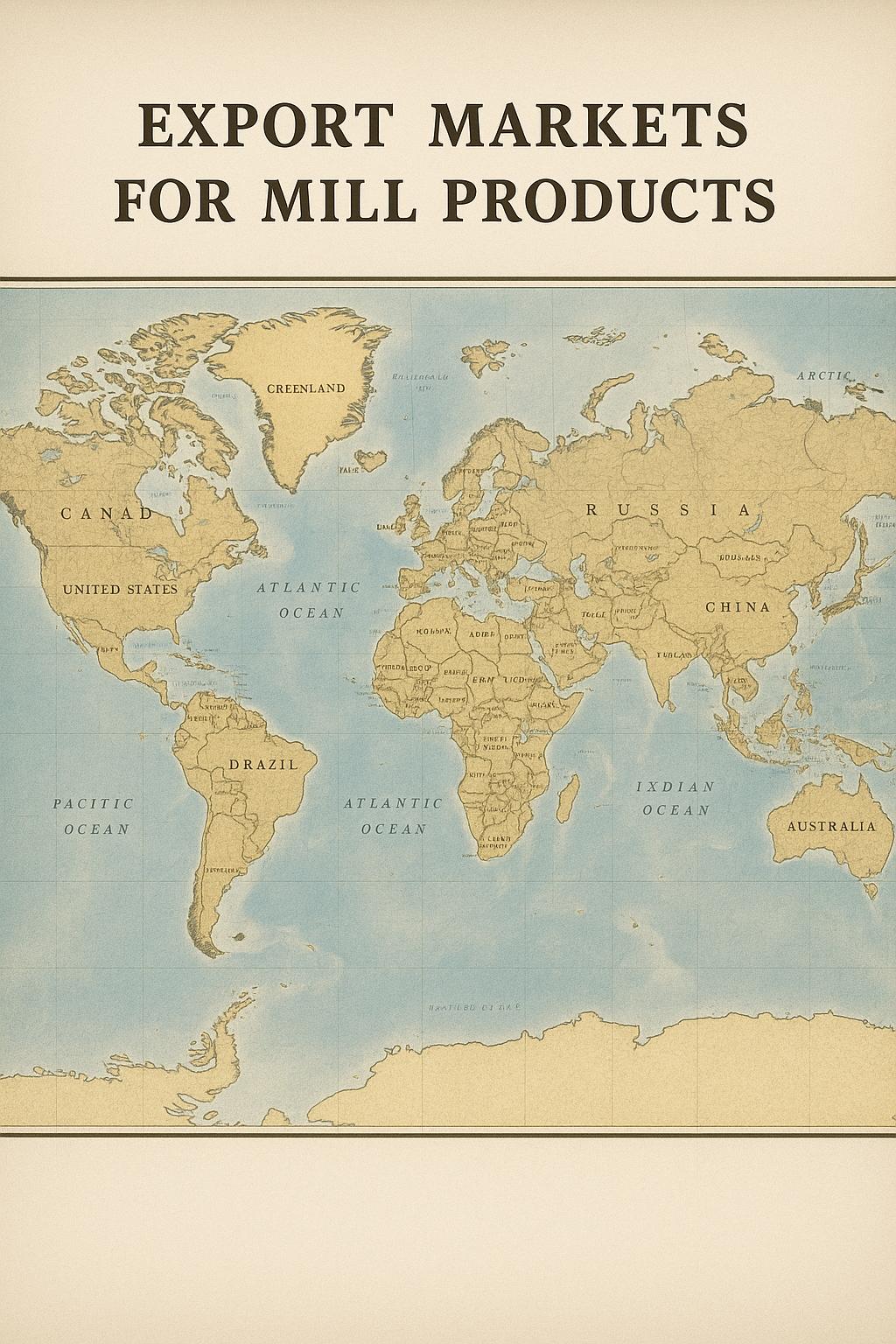
Overview of Mill Products Export Markets
The global market for mill products is a vital component of international trade. Encompassing materials such as textiles, paper, and metals, these products underpin numerous industries. Their utility is widespread, being critical in manufacturing, construction, and consumer goods. Understanding export market dynamics for mill products is crucial for businesses aiming to enhance their international foothold.
Leading Exporters of Mill Products
Certain countries are noteworthy as leaders in mill products exportation. Prominent among them are China, India, and the United States. These nations hold substantial market shares due to their solid manufacturing sectors and cutting-edge production capabilities. The European Union, with countries like Germany and Italy, also plays an instrumental role, exporting significant volumes of specialized mill products.
China’s Dominance in Mill Products
China plays a pivotal role in the global export of mill products. Its expansive industrial base, fused with competitive pricing and extensive supply chains, continually fortifies China’s position in this market. China’s export portfolio is diverse, encompassing textiles and sophisticated metal products. Additional details on China’s trade practices are available on the China Trade Agency’s website.
India’s Growing Influence
India’s mill products sector has witnessed substantial growth, buoyed by governmental initiatives focused on bolstering manufacturing. Notably, the textile industry serves as a cornerstone of India’s export market. It benefits from plentiful natural resources and a skilled workforce. Moreover, India’s dedication to sustainable practices is augmenting its allure on the global stage.
The Role of the United States
The United States continues to be a major exporter of mill products, particularly in high-value items like specialty papers and technologically advanced metal products. American enterprises leverage innovation and quality, allowing them to thrive in international markets and foster a strong reputation for their offerings.
Challenges Facing Exporters
Mill products exporters face several challenges that influence their success in international markets. Among the significant factors are tariff barriers, fluctuating raw material prices, and shifts in consumer preferences. Additionally, environmental regulations and sustainability demands are gaining prominence, urging companies to adapt their operations.
Tariff and Non-Tariff Barriers
Trade policies, including tariffs and non-tariff barriers, influence the competitive standing of mill products in export markets. Import duties, for instance, can diminish product appeal due to increased costs for buyers. Exporters must maneuver through these barriers by exploring alternative markets or negotiating trade agreements.
Raw Material Costs
Raw material costs directly impact the production and pricing of mill products. Volatility in resources like cotton, pulp, and metal prices can cause cost fluctuations, affecting profit margins. Companies require robust supply chain strategies to mitigate these risks effectively.
Opportunities in Emerging Markets
Emerging markets present substantial opportunities for mill product exporters. Regions such as Southeast Asia, Africa, and Latin America are experiencing economic growth, escalating demand for industrial and consumer goods. Exporters can unlock these opportunities by targeting markets with tailored product offerings.
Southeast Asia’s Economic Growth
Southeast Asia’s rapid industrialization coupled with a burgeoning middle class has catalyzed demand for mill products. Nations like Vietnam, Indonesia, and Thailand present lucrative avenues for exporters due to favorable trade agreements and competitive labor costs.
Africa’s Industrial Potential
Africa is emerging as an exciting market for mill products, driven by infrastructure investments and a focus on developing local manufacturing capacities. Exporters can thrive via partnerships and collaborations with local businesses to penetrate this market effectively.
Conclusion
Export markets for mill products are dynamic and multifaceted, presenting both challenges and opportunities for international enterprises. By comprehending market trends, adapting to regulatory changes, and exploring emerging markets, exporters can strategically position themselves for growth and success in the global arena. For more insights into export strategies, consider visiting the Export Strategies Forum.