Understanding Hydropower
Hydropower, also known as hydroelectric power, is one of the most prevalent forms of renewable energy used worldwide. This energy source cleverly takes advantage of the kinetic energy inherent in moving water. By using this natural flow, it generates electricity in a manner that is both efficient and sustainable. The process primarily relies on the energy of falling or moving water, which is converted into mechanical energy by turbines. This mechanical energy is then transformed into electricity by generators.
How Hydropower Works
In a typical hydropower configuration, structures such as dams are built across large rivers to form reservoirs or elevate the water level. The water stored at a height possesses potential energy due to gravity. When this water is released, it flows through turbines, setting them in motion and finally producing electrical power. This is commonly referred to as conventional hydropower.
Another noteworthy method is pumped-storage hydropower, which involves water being moved between two reservoirs situated at different elevations. This system stores energy for future use and releases it during peak demand times. During periods of low electricity demand, excess energy is used to pump water to the upper reservoir. When electricity demand is high, the stored water is released back to the lower reservoir, passing through turbines to generate power.
Benefits of Hydropower
Hydropower is hailed as a clean energy source because it generates power without producing direct emissions. Another advantage is its ability to provide a reliable and consistent power supply. This is largely due to the predictability of water flows, which can be influenced by seasons and rainfall but are generally stable over time.
Hydropower plays a critical role in grid stability and energy storage as well. It helps in balancing supply and demand by rapidly adjusting output to meet consumption needs. In this respect, hydropower is highly instrumental in managing fluctuations in energy demand and supply, contributing significantly to a stable energy grid.
Challenges and Considerations
Despite the clear advantages, hydropower projects present a range of challenges and considerations. The construction of dams and reservoirs can have a profound ecological impact, disrupting local ecosystems and wildlife habitats. This can lead to changes in fish populations and other aquatic life, serving as a significant environmental consideration.
Moreover, hydropower’s dependency on water supply exposes it to vulnerabilities associated with climate. Droughts and changes in precipitation patterns can significantly impact the ability of hydropower plants to generate electricity efficiently. With climate change becoming a growing concern, these vulnerabilities need to be addressed to ensure hydropower remains a reliable energy source.
Watermills: A Historical Perspective
Watermills have a rich history, dating back thousands of years. They were primarily used to grind grain into flour, representing one of the early forms of mechanical energy generation. Watermills utilize the energy of flowing or falling water, marking one of the earliest technologies to harness natural forces for productive use.
How Watermills Function
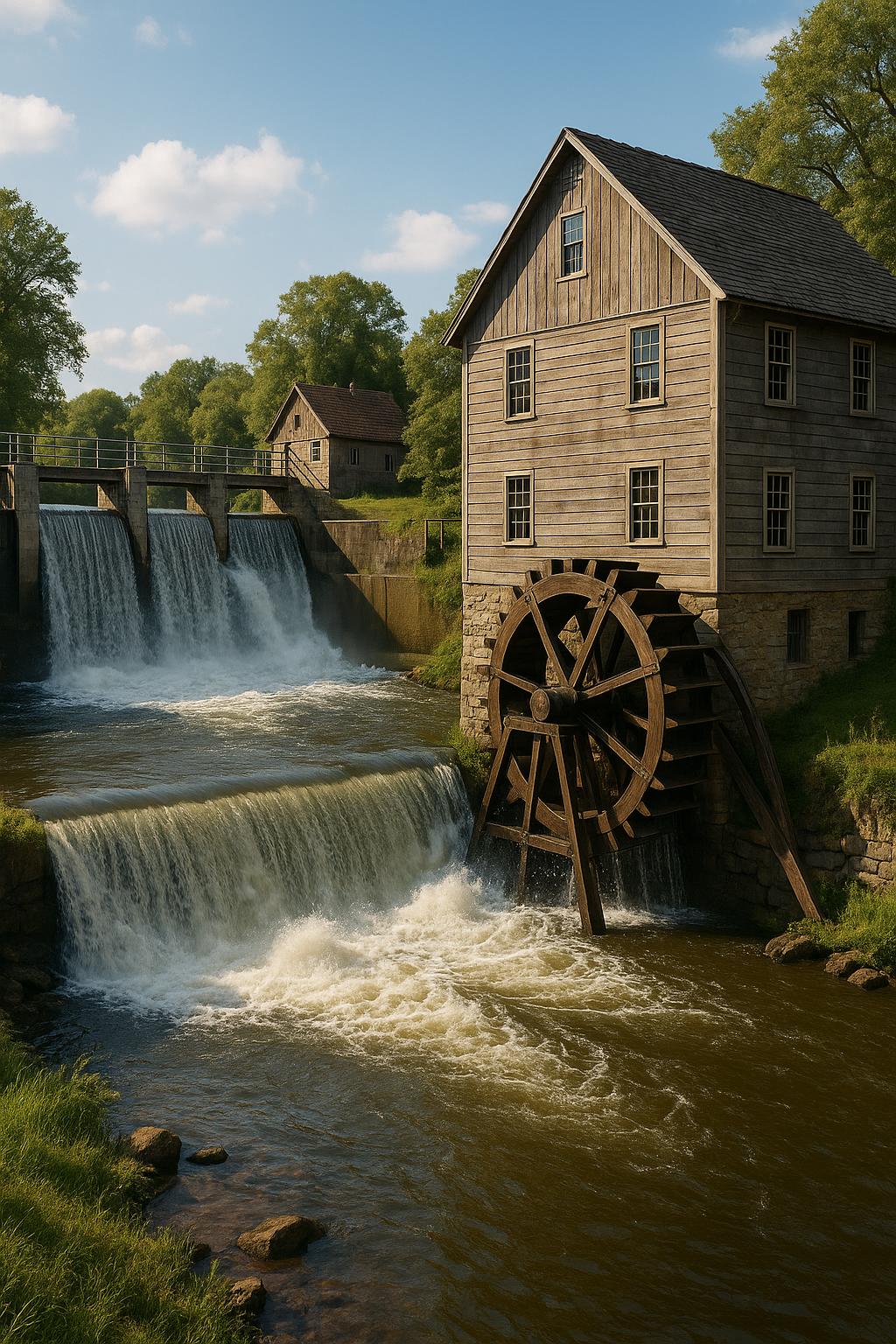
Traditional watermills operate by directing water through a channel known as a mill race to a large waterwheel. The force of the water turns the wheel, translating its kinetic energy into rotational energy. This rotational energy can be utilized for various mechanical processes, such as grinding grain into flour or cutting wood. Unlike modern hydropower setups, watermills typically harness smaller water flows, making them suitable for limited-scale applications compared to contemporary energy demands.
Types of Watermills
Watermills are generally categorized into two main types: horizontal wheel mills and vertical wheel mills. Horizontal wheel mills represent the earlier form of watermills, utilizing a wheel mounted horizontally. This style was common in ancient times and still persists in some traditional settings.
In contrast, vertical wheel mills are more modern and efficient. They employ a wheel mounted vertically, and are more commonplace now due to their enhanced efficiency and greater power output. Vertical wheel mills marked a significant advancement in water-based mechanical processes, paving the way for future innovations in water technologies.
The Transition from Watermills to Modern Hydropower
With technological advancements, watermills gradually lost their prominence as primary sources of energy production. As electricity and industrial demands grew, modern hydropower stations emerged as vastly more efficient and capable of producing significantly more energy than traditional watermills. These power stations leverage advanced technology and the principles of water energy conversion to meet the larger-scale energy needs of today’s societies.
Despite this shift, some watermills continue to function, primarily for historical preservation and small-scale production. These remaining watermills offer a glimpse into past technologies, highlighting the evolution of water energy usage over time.
To learn more about advancements in renewable energy and historical water technologies, you may find insightful information on the [U.S. Department of Energy’s Hydropower page](https://www.energy.gov/eere/water/hydropower-basics) or the resources provided by the [British Hydropower Association](http://www.british-hydro.org/). Both sources provide valuable insights into the evolution and future of water-based energy solutions.