Mills and Job Creation During the Industrial Era
The Industrial Era, which began in the late 18th century, marked a significant turning point in economic and social structures. Central to this transformation was the rise of mills, which played a crucial role in shaping industrial societies. Mills, particularly in the textile sector, were pivotal in creating jobs and transforming labor markets.
The Emergence of Mills
Initially, mills were powered by water and later by steam engines, allowing them to operate on a larger scale than traditional manual methods. This mechanization led to increased production efficiency and the ability to sustain large workforces. For more on the significance of this transition, you can explore further details at HistoryExtra.
The change from manual labor to mechanized production allowed for a massive scale-up in output, which was a key feature of industrialization. The textile industry was among the first to adopt mill technology, revolutionizing the processing of raw materials such as cotton and wool. This revolution not only increased production speed but also improved the quality of goods, making them more affordable and accessible to a growing populace.
Impact on Employment
The proliferation of mills had a profound impact on employment. They became major employers in urban areas and were pivotal in shifting workers from agricultural to industrial jobs. This shift was vital for several reasons:
Creation of New Jobs
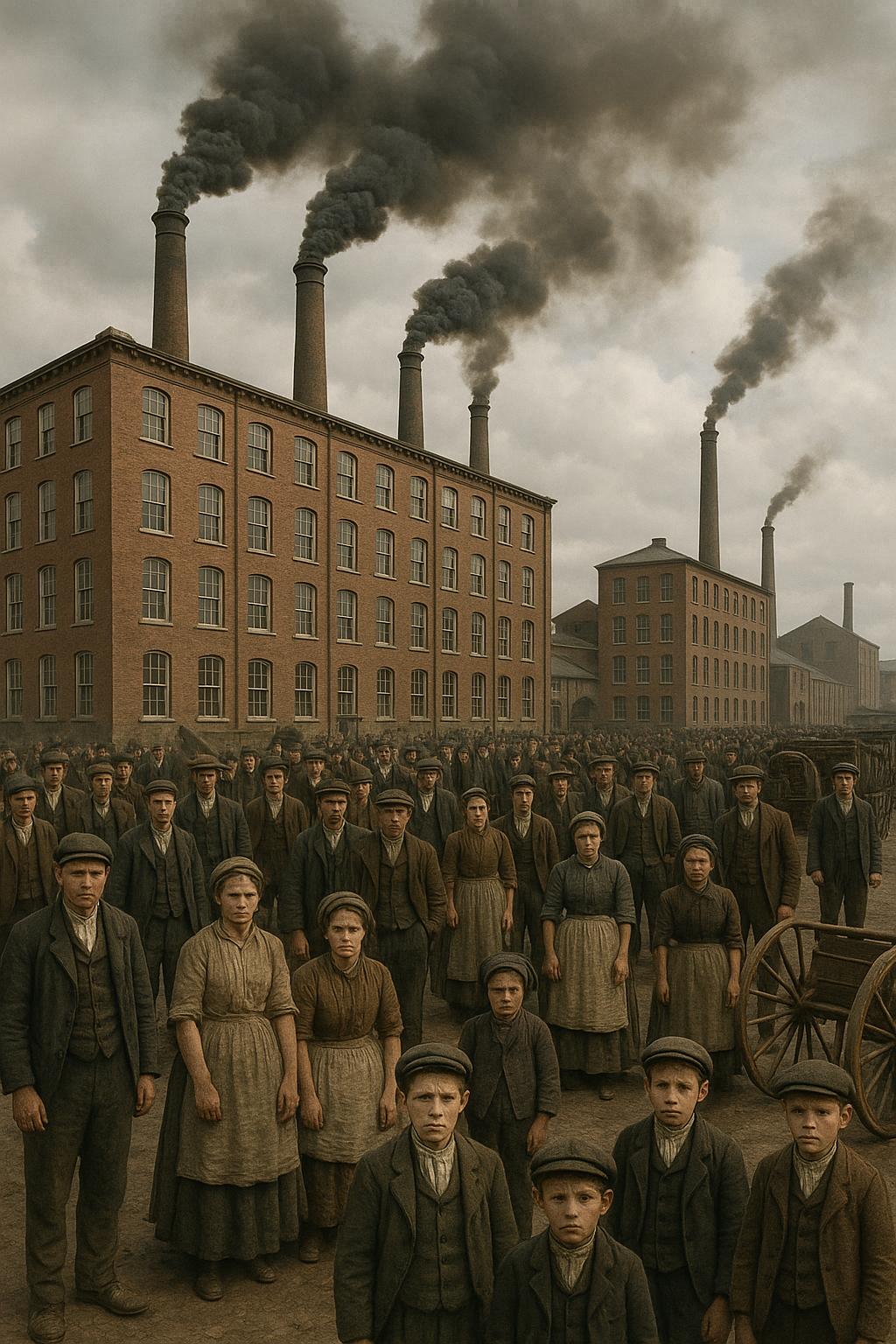
Mills offered a variety of job opportunities, from machine operators to maintenance staff. This variety catered to different skill levels and contributed to a broader scope of employment. Unlike in agriculture, where seasonal work often left laborers without employment at certain times of the year, mills provided consistent and reliable work, albeit often under harsh conditions.
Urbanization
As mills were often located in or near burgeoning cities, they attracted rural populations seeking work, thus promoting urban growth and altering demographic patterns. This movement had lasting impacts on urban infrastructure and social services. Cities evolved rapidly, with the development of housing, transportation, and public services to accommodate the influx of workers. Overcrowding and inadequate living conditions became common issues, but urban environments also offered new social and economic opportunities for individuals and families.
Changes in Labor Conditions
Employment in mills introduced new labor paradigms, including set working hours and wages. To understand how these changes affected labor rights over time, a more detailed analysis can be found at BBC History. Structured working hours and regular paychecks were a departure from the unpredictability of agricultural work, marking a significant transition in labor relations. Additionally, the conditions in mills prompted demands for better labor standards, ultimately contributing to the rise of labor unions and movements advocating for workers’ rights.
Social and Economic Implications
The economic benefits of mills extended beyond direct employment. They stimulated related industries such as transportation and raw material supply, further amplifying job creation. With mills as the nucleus of industrial regions, there was a significant boost in ancillary businesses such as blacksmithing, chemical processing, and machine manufacturing, which in turn provided additional employment opportunities.
Mills also fostered a need for skilled technicians and engineers, thus driving educational reforms and the development of technical institutions. The demand for technical skills led to the establishment of trade schools and apprenticeships, which equipped young workers with the knowledge required to operate and maintain complex machinery.
Influence on Family Structures and Gender Roles
Socially, the rise of mills catalyzed shifts in family structures and societal roles. Women and children entered the workforce in significant numbers, leading to long-term changes in gender roles and family dynamics. The participation of women in industrial labor markets challenged traditional gender norms and contributed to early discussions on gender equality. As women began to earn wages, they gained a degree of financial independence and agency previously unavailable to them.
For children, working in mills became a contentious issue, as it raised concerns about child labor and education. The harsh realities faced by working children eventually led to legislative changes, emphasizing the importance of education and restrictions on underage labor.
Conclusion
In examining the industrial era, mills stand out as pivotal catalysts for economic and social transformation. They not only propelled industrial growth but also deeply influenced employment patterns and societal norms. Mills laid the foundation for modern industrial society by fostering urbanization, expanding job opportunities, and prompting shifts in social structures. The impact of mills on economic infrastructure and cultural landscapes serves as a critical historical lesson, reflecting both the opportunities and challenges of industrialization.
The legacy of mills in transforming work and urban landscapes remains an essential topic for understanding modern industrial societies. For further exploration of the industrial era’s broader effects, see additional resources at National Geographic. The journey from manual craftsmanship to mechanized production underscores the evolving nature of work and highlights the continual adaptation required by societies to balance progress and human welfare in industrial settings.