Richard Arkwright: A Pioneer in the Textile Industry
Richard Arkwright is often hailed as one of the key figures in the early stages of the Industrial Revolution. Born in 1732 in Preston, England, Arkwright’s contributions to the textile industry were revolutionary and laid the groundwork for the modern manufacturing processes we are familiar with today.
The Invention of the Water Frame
Arkwright’s most significant contribution was the invention of the water frame in 1769. This machine was groundbreaking because it was the first to use water power for textile production, marking a departure from the manual labor that was prevalent at the time. The water frame’s ability to spin strong, high-quality threads at scale was unparalleled and led to increased productivity in yarn manufacturing.
Arkwright’s First Textile Mills
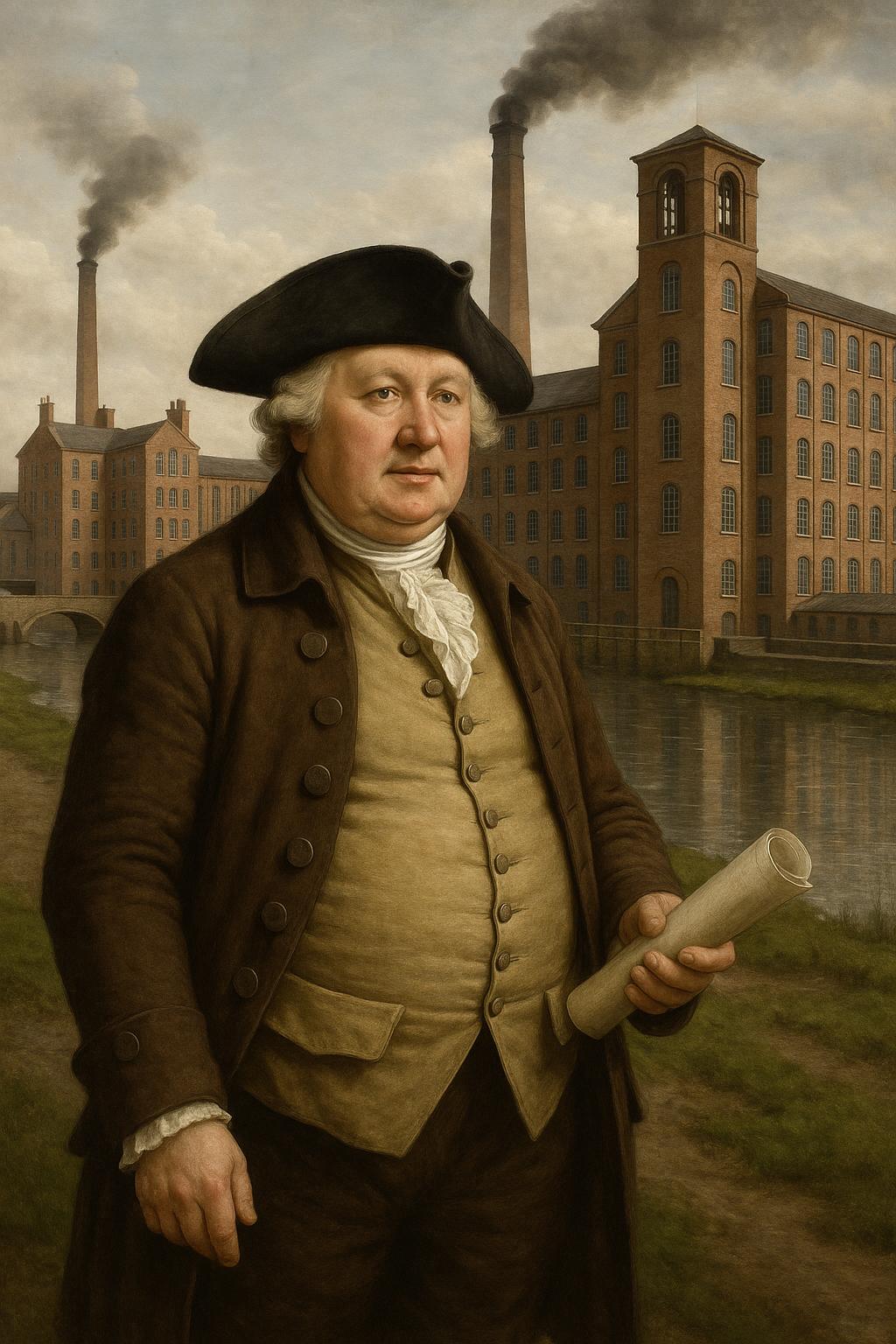
In 1771, Arkwright established his first textile mill in Cromford, Derbyshire. This was one of the first instances of a factory system, where all the production processes were centralized under one roof. The Cromford Mill not only utilized the water frame but also harnessed water power from the nearby river, illustrating Arkwright’s innovative integration of technology and natural resources.
Expansion and Success
Arkwright’s success with the Cromford Mill led to the establishment of several other mills across England. His ability to efficiently organize labor and production set a new standard for the industry. By implementing a systematic approach to manufacturing, Arkwright was able to produce textiles at a formerly unimaginable scale, thus significantly lowering production costs.
The Legacy of Richard Arkwright
Richard Arkwright’s impact on the textile industry and the Industrial Revolution remains substantial. His innovations not only changed the textile manufacturing processes but also had wide-reaching effects on the nature of work and economic structures in Britain and beyond. Often referred to as the “Father of the Modern Industrial Factory System,” Arkwright’s legacy is reflected in the factory systems widely used in diverse industries today.
Arkwright’s Early Life and Background
Born the youngest of thirteen children, Richard Arkwright’s journey from a humble barber to an industrial giant is a narrative of determination and ingenuity. His early life in Preston did not provide many opportunities for education or advancement. Nonetheless, Arkwright was driven by a curiosity about the world and had a keen interest in invention and developing new ideas. These qualities would later be pivotal as he navigated the rapidly changing economic landscape of Britain.
The Development of Arkwright’s Machine
The water frame was not an isolated invention. It came about during a period of significant experimentation in textile manufacturing aimed at increasing efficiency. Arkwright improved upon the designs of others which were centered around automation, such as the spinning jenny and the flying shuttle. His water frame was distinctive because it utilized gears and rollers powered by water, ensuring greater consistency in the quality and strength of the spun yarn. This machine answered a crucial need for efficient production, expanding the possibilities for the textile industry.
Foundation of Textile Mills: The Birth of the Industrial Factory
Arkwright’s establishment of Cromford Mill symbolized the birth of the modern factory system. Before Arkwright, most textile production occurred in small, scattered workshops or home-based settings. By centralizing production processes in one location, the factory system Arkwright instituted at Cromford allowed for the optimization of resources and labor. Utilizing the power of the river Derwent, Cromford Mill was able to function with an unprecedented level of efficiency, setting new precedents for productivity and complex organization in industrial environments.
Labor Organization and Workforce
Arkwright’s factories were notable, not just for their technological innovations, but also for how they organized labor. He carefully structured the workforce to maximize productivity, employing a large number of women and children. While this practice is viewed critically today, at the time, it provided steady work for many who had few economic alternatives. Arkwright’s introduction of shifts and structured working hours became a model for later industrial enterprises and significantly influenced the evolution of labor practices.
Influence on Economic and Social Structures
The changes Arkwright brought to the textile industry had profound impacts beyond production. With factories becoming the nucleus of industrial towns, populations surged in urban centers, inaugurating a period of rapid urbanization. This migration and concentration of labor in industrial settings altered traditional economies and social structures, laying the foundations for the modern capitalist economy. Through Arkwright’s innovations, the Industrial Revolution moved from being a sequence of technological advancements to a societal transformation affecting every aspect of life in Britain and subsequently the world.
Arkwright’s Subsequent Innovations and Collaborations
Beyond the water frame, Arkwright’s commitment to innovation saw him continually refine processes and collaborate with other inventors. Working with skilled engineers and craftsmen, Arkwright developed new carding machines that greatly improved the preparation of wool and cotton. Furthermore, he sought to protect his innovations through patents, which, although controversial at the time, stressed the importance of intellectual property in advancing industrial technology.
Controversies and Legal Challenges
Despite his success, Arkwright’s rise in the textile industry was not without disputes. Numerous legal challenges questioned the validity of his patents, with many accusing him of patenting existing machines or modifications thereof. In 1785, many of Arkwright’s patents were overturned by court ruling. Nevertheless, these controversies highlight the intensely competitive nature of industrial innovation during the period and Arkwright’s tenacity in advocating for his contributions.
Economic Impact and Global Influence
The economic impacts of Arkwright’s inventions extended far beyond Britain’s shores. By demonstrating how to effectively harness and integrate technology within manufacturing, Arkwright’s methods were emulated around the world. The proliferation of textile mills and the accompanying changes in production ruined the traditional artisanal production but also inaugurated an era of mass production that would become the norm in the global economy. These developments boosted Britain’s economy, making it a leading industrial nation and influencing economic strategies worldwide.
Modern Reflections on Arkwright’s Legacy
In today’s context, Richard Arkwright’s contributions continue to be meaningful as we assess the origins of modern industry. His work not only catalyzed significant shifts within the textile sector but also provided a template for industrial organization more broadly. Researchers and historians often examine Arkwright’s strategies and innovations as crucial turning points that illustrate the evolution of technology and its intersection with economics and society.
Conclusion
Richard Arkwright remains a central figure in the history of industrial development. His efforts laid essential foundations for the production efficiencies that define contemporary manufacturing. The proliferation of the factory system, emphasizing mechanized processes and structured labor, stand as a testament to Arkwright’s ingenuity and influence. As industries continue to evolve with new technologies, understanding the legacy of pioneers like Arkwright provides valuable insights into how innovative thinking can transform economic landscapes and societal structures.