Introduction
Throughout history, music has served as a repository of cultural memory, conveying tales of community, industry, and nature’s permanence. Songs about mills, such as “The Old Mill Stream,” hold a special place in the tapestry of traditional music. They are rich with themes that draw from nature, historical progression, and the foundational industries around which many societies grew and flourished. Although these songs often invoke imagery of an agrarian past, they maintain their importance within folk music traditions globally. These songs provide not just a historical perspective but also a lens through which to view the evolving relationship between communities and their environment.
Historical Context
The tradition of composing and singing songs about mills is deeply rooted in a time when mills were central to community life. As an essential component of agricultural processing and economic stability, mills became frequent subjects in folk ballads and songs. These compositions often functioned as oral history, encapsulating the shared experiences, struggles, and triumphs of a community. In many agrarian societies, the mill was more than just a place of work; it was a communal hub where people gathered, exchanged news, and socialized. As such, songs about mills not only celebrated the grindstone’s vital role in daily life but also captured the social and economic atmosphere of the time.
In pre-industrial times, mills were crucial to the sustenance and economic health of both small villages and larger communities. The miller’s role was highly respected, with responsibilities spanning from grinding grain to providing employment and facilitating trade. The functional importance of the mill, combined with its social significance, made it a focal point around which stories and songs naturally coalesced. These songs often revolved around daily life, romantic tales, and even moral lessons distilled from the lived experiences of those who depended on the mill’s productivity.
“The Old Mill Stream”
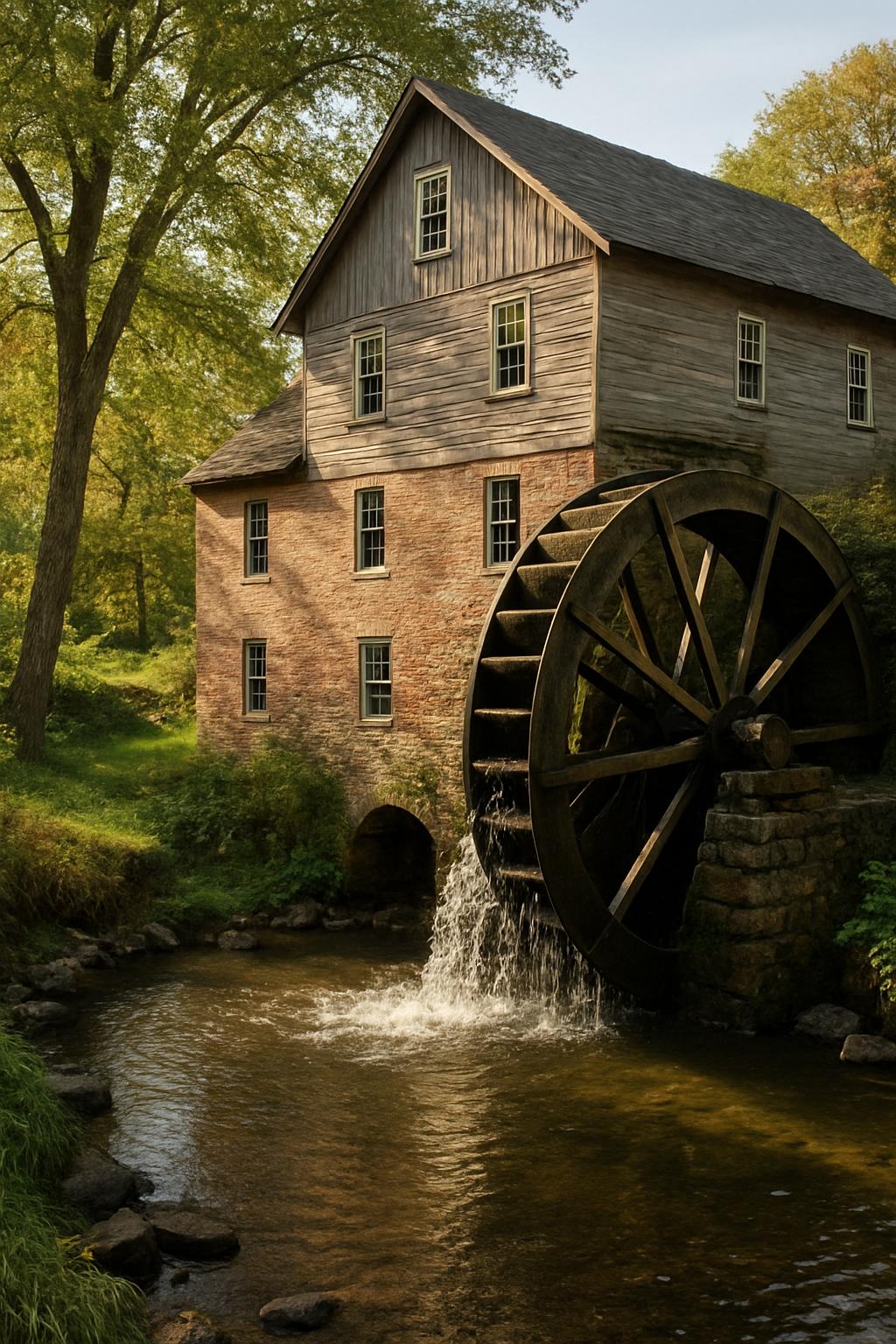
One of the most celebrated songs about mills is “The Old Mill Stream,” known formally as “Down by the Old Mill Stream.” Written by Tell Taylor in 1910, this song rose to popularity in the United States and remains a quintessential piece of early 20th-century American music. The enduring appeal of this song lies in its eloquent lyrics that nostalgically evoke the tranquility and romantic allure of a mill stream. The narrative encapsulates the essence of a simpler time and place, a snapshot of an era where nature and human sentiment were profoundly intertwined.
Song Structure and Themes
The structure of “The Old Mill Stream” employs a simple yet evocative melodic tune characteristic of popular songs from its era. This structure allows for the emotive power of the lyrics to take center stage. Thematically, the song is centered around love and nostalgia, with the mill stream serving as a picturesque backdrop. The imagery of the mill stream becomes a powerful metaphor for enduring affection and the steadfast nature of the environment amidst the relentless passage of time.
This romanticization reflects broader cultural elements where landscapes, especially those imbued with personal or communal significance, frequently appear in folk music as symbols of stability and continuity. The mill stream in Taylor’s work, and in similar songs, represents a place where memories are shared, and love stories are crafted, giving listeners a poignant sense of connection to their heritage.
Connection to Folk Traditions
Songs that revolve around mills are often classified within the folk music genre due to their traditional roots and narrative-driven composition. Folk music, inherently passed along through oral traditions within communities, serves as an auditory reflection of the social and cultural milieu of its time. These songs encapsulate more than just melody; they convey the collective social conditions, customs, and stories prevalent during their genesis.
As instruments of cultural expression, songs about mills continue to resonate with modern audiences, drawing listeners into stories that are both universal in their themes and uniquely tied to specific places and times. They are performed and cherished not only because of their historical value but also due to the timeless nature of their themes, which speak to enduring human experiences and emotions. These songs carry with them the whispers of past generations, inviting contemporary audiences to explore and appreciate a shared cultural heritage.
Conclusion
Music centered on mills, exemplified by “The Old Mill Stream,” function as both historical artifacts and cultural touchstones, bridging the divide between past and present. Their continued popularity underscores their lasting relevance and the universal appeal of themes centered around nature, love, and nostalgia. As important components of musical and cultural heritage, these songs embody the spirit of communities that thrived around mills, providing insight into how these institutions influenced daily lives and societal progression.
These songs serve not only as a reflection of a bygone era but also as a tribute to the timelessness of human nature and the continued importance of preserving cultural narratives through music. Even as communities have evolved and mills have changed or disappeared, the essence captured in these songs persists, reminding us of the enduring relationships between people, their environments, and the stories spun through melody and verse. Learn more about folk music and its influences to discover how such traditions continue to shape modern musical landscapes, creating bridges between old and new, tradition and innovation.