The Quakers and Their Flour Mills: A Historical Overview
The Religious Society of Friends, commonly known as the Quakers, played a significant role in the development of flour milling technology and commerce, particularly during the 18th and 19th centuries. Known for their values of simplicity, integrity, and community, Quakers were instrumental in pioneering advancements in this vital industry.
Origins and Motivations
Quakers, originally founded in England in the mid-17th century, began to establish themselves in America in the following decades. Their migration to America was driven by a desire for religious freedom and the opportunity to live in communities that practiced their principles. As they settled in places like Pennsylvania and New Jersey, Quakers became prominent in various industries, including agriculture and milling.
Quakers desired to form egalitarian communities that reflected their belief in the Inner Light, or the presence of God in every person. This motivated them to create sustainable enterprises that sustained not only their communities but also fostered ethical interactions with others. This focus on ethical living extended into the businesses they operated, leading them to seek industries that could be developed with fairness and integrity.
Innovations in Milling Technology
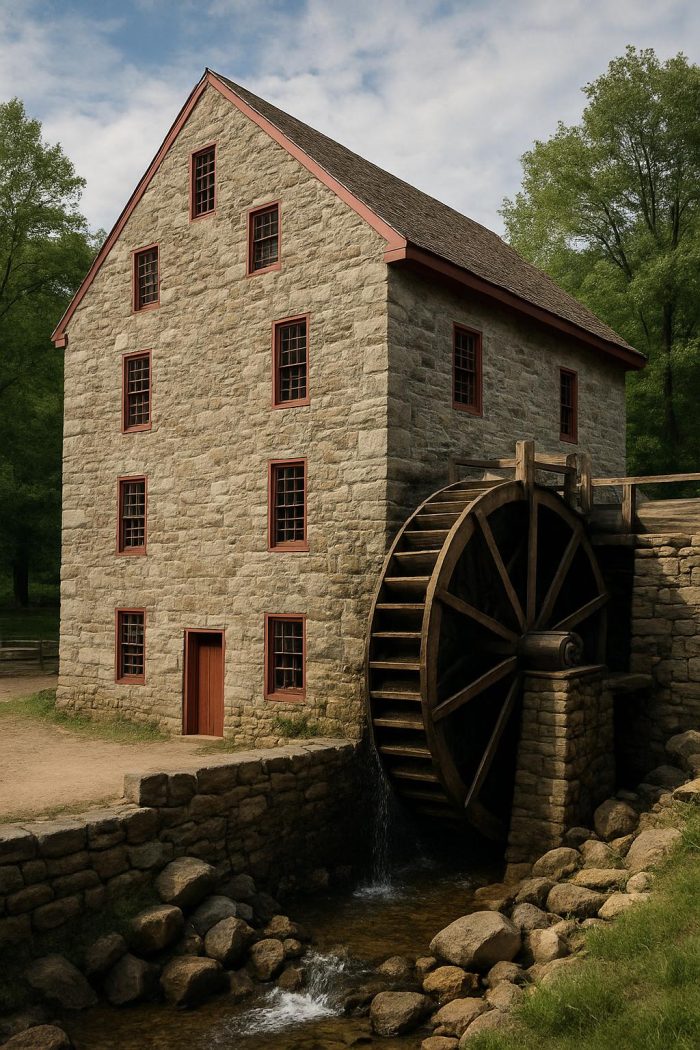
Quakers were known for their pursuit of high-quality flour production. Early on, they embraced technological advancements such as the roller mill, which was a significant improvement over traditional stone grinding methods. This innovation not only increased efficiency but also produced a finer and more consistent flour. By adopting such technologies, Quaker-owned mills were able to produce a superior product that met the growing demands of urban markets.
The roller mill, unlike the stone grinding mill, used a series of metal rollers to break down wheat kernels, removing the bran layer and producing a finer white flour. This innovation catered to urban consumers’ preference for whit and light-textured bread, which was becoming a staple in their diets. The quality and consistency of the flour from roller mills cemented the reputation of Quaker flour as an essential product in American households.
The adoption of mechanical sifters and steam engines further exemplified Quakers’ forward-thinking approach. These improvements not only increased production capacity but also reduced labor costs, enhancing the economic competitiveness of Quaker mills. This ability to adopt and refine such advancements can be traced back to their open-mindedness and analytic skills nurtured by their community values and enlightened approaches to industry.
Quaker Flour Mills in America
During the 19th century, Quaker flour mills became synonymous with quality and reliability. As milling technologies evolved, Quaker millers, such as the well-known Benjamin Franklin, expanded their operations. Franklin, though not a Quaker himself, was closely associated with the community in Philadelphia and utilized innovative techniques learned from Quaker millers. Their mills often became the heart of the communities, providing employment and fostering economic growth.
One such example of the Quaker influence in the flour industry can be found in the city of Philadelphia, which became a center of milling activity. Here, Quaker mills contributed significantly to the city’s economy by supplying not only local markets but also exporting flour internationally. The Philadelphia waterfront included docks and warehouses dedicated to this thriving trade, which was largely driven by the ethical and high-quality practices of Quaker millers.
Quaker mills also played a crucial role during food shortages and economic disruptions. Their emphasis on fair pricing and quality ensured that consumers could rely on the essential staples produced by these mills, exemplifying their contributions to public welfare.
The Role of Quaker Principles
The success of Quaker millers can be attributed in part to their strong adherence to ethical business practices. These included fair pricing, honest dealing, and superior quality control. Such principles were not only deeply rooted in their religious beliefs but also gave them a competitive edge in the marketplace.
Quaker millers upheld transparency in their dealings, winning customer trust and loyalty—a crucial factor that sustained businesses during times of economic uncertainty. Their model of community-focused business, that aimed to uplift rather than exploit, set standards and inspired other businesses.
Innovation and adaptation were coupled with a deep commitment to community service and economic equality. They invested in community infrastructure, such as roads and schools, contributing to the holistic development of the areas they operated in. Their inclusive employment practices provided stable and dignified work for people from diverse backgrounds, promoting social cohesion.
The Impact of Quaker Mills Today
While many original Quaker mills have ceased operations or evolved into modern businesses, their legacy endures. Companies that took inspiration from Quaker practices continue to thrive, maintaining high standards of product quality and ethical business dealings. The influence of Quaker principles in modern business ethics and community-focused operations can be traced back to these early enterprises.
Modern flour companies and brands that emphasize ethics, sustainability, and quality reflect the foundational principles laid down by Quaker millers. These principles continue to guide contemporary discussions on corporate responsibility, sustainable agriculture, and ethical consumerism. Such enduring legacies highlight how 18th and 19th-century Quaker innovations in milling and commerce have a lasting impact, beyond their original economic context.
Continuing the Legacy
For further information on Quaker contributions to the milling industry and related innovations, consider exploring resources from historical societies and local archives dedicated to preserving the history of the Quakers and their businesses. The exploration of these resources can provide deeper insights into how these historical practices continue to shape modern industries and ethical business practices today.
These resources may be accessed through various historical archives, which store information on the development and contributions of Quaker-run enterprises. The continued research and interest in such topics underscore the contemporary relevance of their ethical and quality-driven approach to business in the modern world.