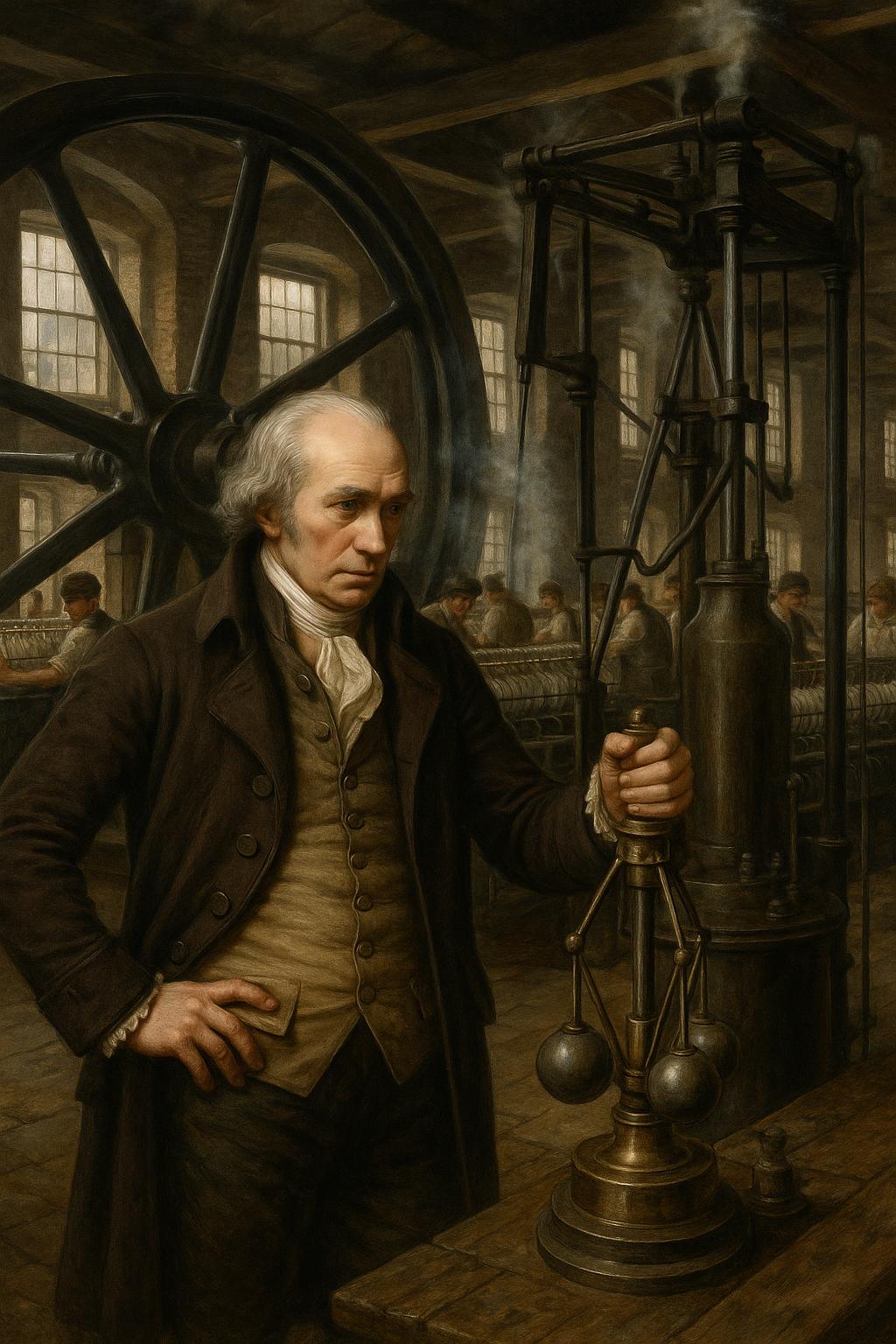
James Watt and the Evolution of Steam Mills
The development of steam mills during the Industrial Revolution marked a significant turning point in industrial production. Among the notable contributors to this transformation was the Scottish engineer and inventor, James Watt. His innovations in steam engine technology provided the foundation upon which modern industry was built, particularly impacting the operation and efficiency of steam mills.
The Advent of Steam Power
Before Watt’s involvement, steam engines, originally conceptualized by Thomas Newcomen, were primarily employed for specific tasks such as pumping water out of mines. While they were effective in certain applications, the Newcomen engines had notable inefficiencies, consuming large amounts of fuel. This inefficiency posed a major challenge for broader industrial applications, such as driving machinery in mills, which required more sustainable energy solutions.
Innovations by James Watt
James Watt’s critical contribution was his invention of the separate condenser in 1765. This development significantly improved the efficiency of steam engines by preventing the engine cylinder from being cooled every power stroke. By allowing the condenser to remain at a low temperature while keeping the cylinder hot, Watt’s design reduced the waste of thermal energy and improved the overall fuel efficiency.
Additionally, Watt introduced a number of other enhancements:
The Sun and Planet Gear: This mechanism permitted the steam engine to produce rotary motion, thus enabling new industrial applications beyond mere water pumping. The ability to generate rotary motion was instrumental in powering a wide array of machines, fundamentally altering industrial production processes.
The Double-Acting Engine: In this design, steam acted on both sides of the piston, which increased power and efficiency. This improvement enabled steam engines to operate with more potency, offering a substantial boost in operational capabilities compared to previous engine designs.
The Governor: An automated device for speed regulation, the governor played a crucial role in stabilizing engine output. Its ability to maintain consistent operational speed enhanced the reliability of steam engines, ensuring more predictable performance in industrial settings.
Impact on Steam Mills
With these improvements, steam engines became viable as a power source for mills, influencing not just the textile industry but other sectors as well. This led to the proliferation of steam mills across Britain and eventually the world. The ability to operate machinery with greater power and consistency fueled expanded production capabilities and ushered in a new era of industrial growth.
Watt’s innovations also allowed mills to be located away from water sources, which were previously necessary to power water wheels. This newfound flexibility facilitated urban industrial growth by enabling factories to be established closer to labor sources and markets. As a result, industrial centers began to emerge in new locations, contributing to urbanization and economic expansion.
The Broader Industrial Impact
The adoption of James Watt’s steam engines in steam mills symbolized a shift from agrarian economies to industrialized societies. His engineering solutions played a critical role in accelerating the pace of industrialization, setting a precedent for future technological advancements. The efficiency and productivity increases afforded by steam mills expedited the rise of the factory system, ultimately playing an integral role in shaping modern economic landscapes.
Watt’s legacy extends beyond his immediate inventions. His improvements to steam engine technology paved the way for subsequent developments in power generation and mechanical engineering. The ripple effects of his innovations can be seen in various sectors, from transportation to manufacturing, and even in the global economic system.
The steam engine became an essential component of industrial operations throughout the 19th century, facilitating the mass production of goods and contributing to significant societal changes. By reducing the dependency on manual labor and enabling large-scale production, Watt’s contributions were central to the industrial revolutions that followed in other countries as well.
In the broader context of industrial history, Watt’s advancements exemplify the critical role of technological innovation in economic development. They highlight how technological breakthroughs can drive societal transformation, fostering new economic models and altering the fabric of daily life.
To explore more about the history and impact of James Watt’s innovations, you might consider visiting [reputable sources](#) that focus on industrial history and engineering advancements. These resources can provide deeper insight into how Watt’s work is seen not just as a function of mechanical genius but as a pivotal force in shaping the modern world.