History and Significance of George Washington’s Gristmill
The gristmill owned by George Washington is an essential piece of American history, reflecting both the ingenuity of the time and the first president’s entrepreneurial spirit. Built in 1771, Washington’s gristmill was part of his larger farming operation at Mount Vernon. This mill played a significant role in the production of flour and cornmeal, which were crucial staples during the colonial period. By understanding the operation and significance of this mill, we gain insight into the broader economic and social landscape of the 18th century in America.
Design and Functionality
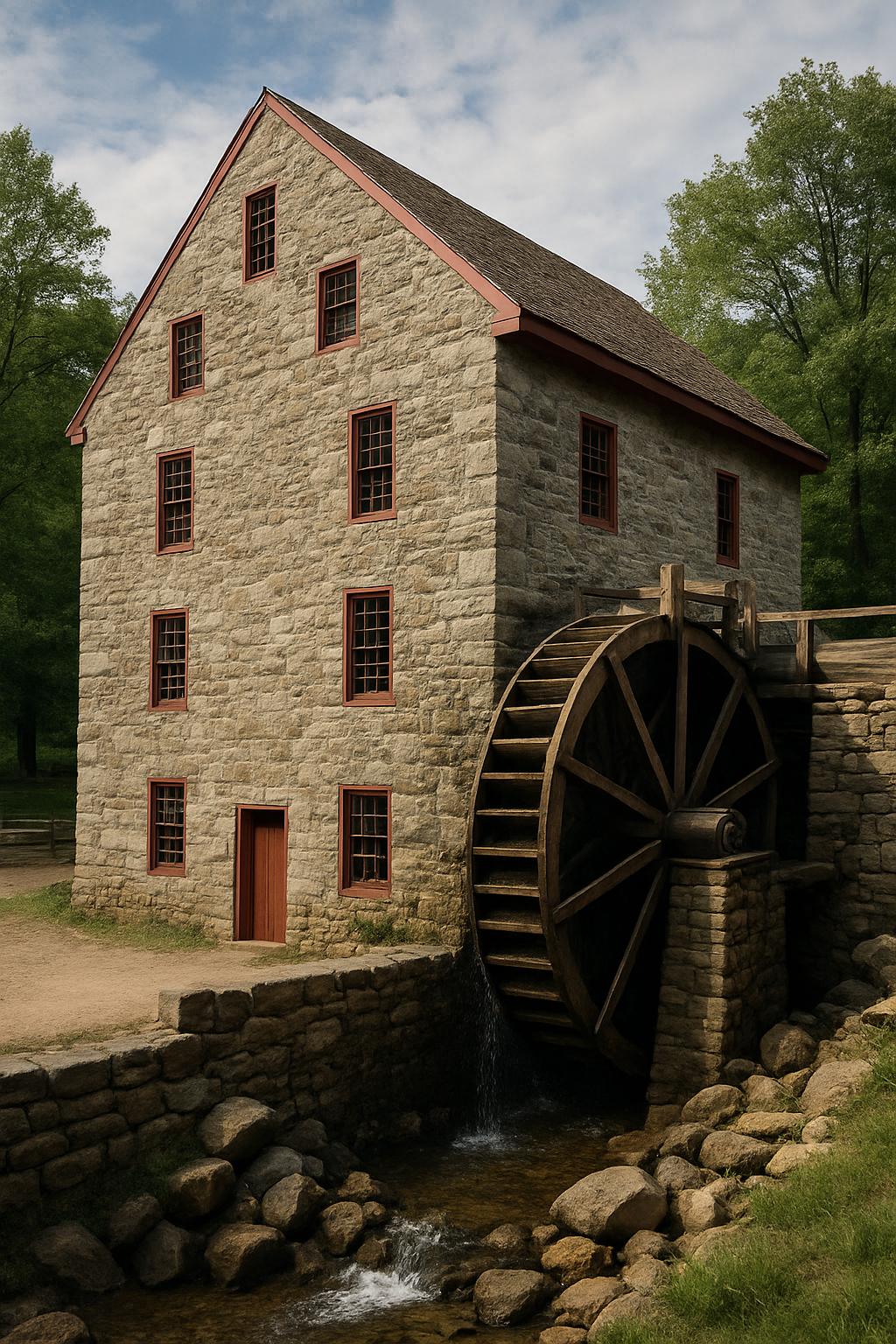
George Washington’s gristmill was designed to leverage the innovative milling technology of the era. It utilized a waterwheel connected to a system of gears and grinding stones. The mill was set up to efficiently process grains, which allowed for mass production. Washington employed a skilled miller to operate the mill, ensuring high-quality output.
The functionality of the gristmill was largely dependent on its ability to harness water power effectively. The waterwheel acted as the primary source of energy, a common feature of mills during this time. The design made use of gravity to transport water to the wheel, powering the gears that turned the massive millstones used for grinding. This system not only exemplified the scientific innovations of the time but also provided an economic advantage, as it permitted the continuous grinding of grains with minimal human labor.
Advanced Milling Technology
In the late 1790s, Washington upgraded the mill to incorporate an automated milling system developed by Oliver Evans, a prominent American inventor. This revolutionary design brought several improvements, including a mechanized system for feeding grain to grinding stones, sifting flour, and recycling water, which increased productivity and reduced labor.
Evans’ system was groundbreaking in that it transformed the arduous and time-consuming task of milling into a more efficient and streamlined operation. This innovation was achieved through a series of automated devices, such as bucket elevators, conveyor belts, and screw conveyors, which transferred grain and flour seamlessly between different stages of the milling process. By reducing the need for manual labor, the automation of Washington’s gristmill allowed for increased output and a consistent product quality, establishing the mill as a profitable component of Mount Vernon’s agricultural enterprise.
The Economic Impact
George Washington’s gristmill was not only an agricultural tool but also a significant economic asset. The mill provided flour and cornmeal for regional markets, supplying local communities and even exporting to Europe and the West Indies. This trade helped establish Washington as a prominent agricultural entrepreneur.
As an integral part of a diversified agricultural operation, the gristmill enabled Washington to capitalize on the robust demand for flour and cornmeal, essential staples in both domestic and international markets. The capacity to produce large quantities allowed Washington to engage in trade agreements with merchants and buyers from afar, enhancing the economic prosperity of his estate. Additionally, the success of the mill contributed to the greater economic tapestry of the region, supporting local agriculture and trade networks critical to the burgeoning American economy.
Trade and Agriculture
Washington’s gristmill contributed to Mount Vernon’s status as a thriving plantation. Alongside his other farming enterprises, the mill ensured a steady revenue stream. This diversification was crucial in overcoming the financial difficulties faced by many plantation owners of the time.
By complementing traditional crops such as tobacco with wheat and corn production, along with an emphasis on milling, Washington was able to mitigate the risks associated with relying solely on one cash crop. This strategy also facilitated the exchange of goods with international markets, which were eager for American produce. By engaging in these multifaceted agricultural practices, Washington not only secured financial stability but also set a precedent for farming operations across the new nation. His gristmill became emblematic of the keen business acumen and forward-thinking strategies that helped shape America’s early agricultural landscape.
Preservation and Modern-Day Importance
Today, George Washington’s gristmill is preserved as a historic site. It stands as a testament to early American industrial innovation. Visitors can witness a working demonstration of the milling process, experiencing firsthand the historical methods and technology.
Preservation efforts have ensured that the mill, along with its surrounding structures, provides an authentic depiction of 18th-century milling practices. These conservation efforts maintain not only the structural integrity of the site but also the educational value it offers to the public. By engaging with such historical landmarks, visitors gain a deeper appreciation for the engineering prowess and entrepreneurial spirit that underpinned America’s development.
Visiting the Site
Those interested in exploring George Washington’s gristmill further can plan a visit to the Mount Vernon Estate. The site offers guided tours, educational programs, and special events throughout the year, providing a deeper understanding of its history and significance.
During a visit, guests can observe the operational waterwheel and milling processes, which closely replicate the original methods employed during Washington’s time. Additionally, the educational programs available at the site illuminate various aspects of life at Mount Vernon, broadening the historical context of the gristmill’s role within the estate and in the wider colonial economy.
Conclusion
The gristmill serves as more than just a historical monument; it offers insights into early American industry, the economic practices of the colonial era, and George Washington’s prowess as a businessman. The preservation of such sites helps to illuminate aspects of history that go beyond the well-known stories of Washington as a military leader and president.
Through the lens of his gristmill, we gain a richer understanding of Washington not just as a foundational figure in American history, but as a visionary entrepreneur whose influence extended into the industrial and economic spheres. The continued interest and preservation of this site underscore the enduring relevance of Washington’s multifaceted legacy, inviting reflection on the ingenuity and adaptability that characterized the early United States.